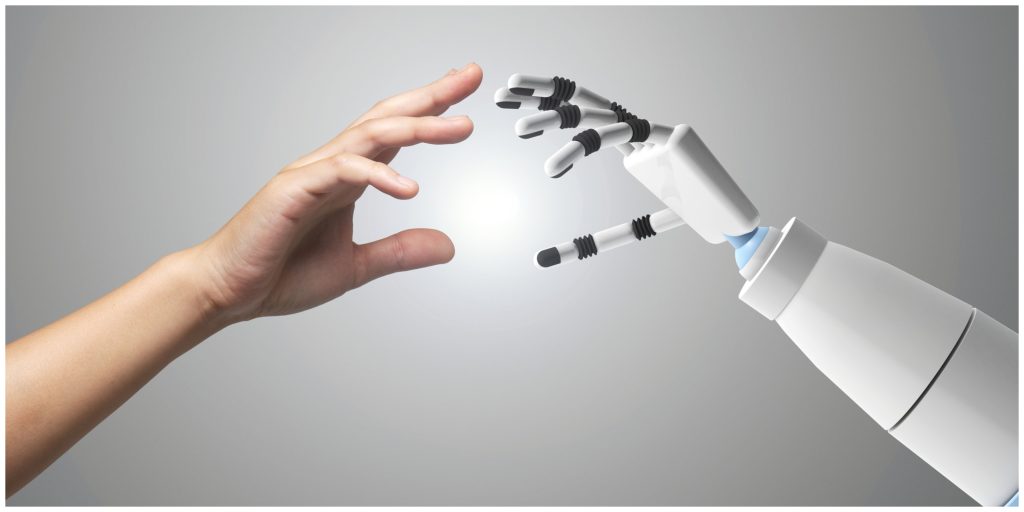
Artificial intelligence is already transforming our lives, but the question « Who will win in the future? » remains at the centre of public and professional debates. First, it is important to understand that this confrontation is not necessarily a duel of zero sum. To capture the issues, consider technical capabilities, human limitations and plausible scenarios where cohabitation and augmentation dominate rather than replace.
In this wider context, advances such as space computing also influence the evolution of intelligent systems; Here is an article that takes into account these dynamics and concrete applications, including prospects from the space computing and its implications for technology.
Who will win in the future? — challenges, limitations and opportunities
The apparent duel between AI and humans is based on measurable criteria: speed, computing capacity, creativity, empathy, moral decision-making, and adaptability. Excellent machines in massive data processing and repetitive execution. Humans remain superior to common sense, intuition and value management.
The real question is, what combinations of man-machine skills will bring the most value? Possible scenarios include:
- increase in human capacity by AI,
- partial replacement in routine tasks,
- ethical and governance conflicts requiring regulation.
Next, let us analyse these dimensions in detail, with concrete examples and practical advice for companies, workers and decision-makers.
Technical capabilities: where AI already surpasses humans
Machine learning and deep learning systems handle data volumes that are inaccessible to humans.
For example, in medical imaging, trained models identify abnormalities with a precision often greater than human diagnoses for certain types of tumours.
In finance, algorithms analyze millions of real-time transactions to optimize trades.
These successes are based on three factors:
- massive access to data,
- sophisticated models and neuronal architectures,
- infrastructure for progressive computing.
However, these systems have limitations: data bias, lack of explanation, and fragility in the face of off-distribution scenarios.
Human forces: creativity, judgment and ethics
Excellent humans in:
- conceptual creativity and metaphors,
- contextual understanding and common sense,
- ethical decision-making in uncertainty.
In artistic research, for example, AI can generate new forms, but intent and narrative remain predominantly human.
In addition, leadership requires empathy, negotiation and understanding of social implications — skills difficult to codify.
Practical advice: develop complementary skills to AI, such as critical thinking and interdisciplinary project management.
Scenarios for the plausible future
Several trajectories are possible. The following scenarios are classified by medium-term probability:
-
Widespread cooperation (more likely)
- The AI increases human productivity.
- New professions are emerging around system supervision.
-
Targeted substitution
- Repetitive and dangerous tasks will be automated.
- Rapid sectoral transitions (logistics, production).
-
Societal conflict
- Technology unemployment poorly managed.
- Political and social pressures leading to strict regulation.
-
Technology dominance (less likely in the short term)
- Autonomous systems exceed human competence in critical areas without an appropriate ethical framework.
Transition words help reading: first, then, finally.
Employment impacts: adaptation and conversion
Automation transforms the nature of jobs.
For example, in manufacturing, robots replace dangerous tasks, but also create robotic maintenance and data engineering positions.
Recommended actions for workers:
- Learn basic digital skills (programming, data analysis).
- Specialize in occupations involving human interaction (health, education).
- Develop cross-cutting skills (communication, creativity).
Recommended actions for enterprises:
- Investing in continuing training for employees.
- Design positions that exploit man-machine complementarity.
- Establish ethical risk and bias assessment processes.
Governance, ethics and regulation
Trust in AI requires transparency and accountability.
Essential principles:
- explanation: be able to explain an algorithmic decision,
- responsibility: define who responds in case of error,
- security: protect against adverse attacks,
- Equity: correcting discriminatory biases.
Advice for decision makers: Create adaptive legislative frameworks that include independent audits and certifications.
Concrete examples of AI-human integration
Actual and reproducible cases include:
- Health: diagnostic aid systems + final physician review to reduce errors.
- Education: Smart tutors personnalizing learning, supervised by teachers.
- Agriculture: sensors and drones optimize irrigation, while farmers make strategic decisions on crops.
List of good practices for implementing an AI project:
- Clearly define the business objective.
- Collect and clean relevant data.
- Involve end users from the design stage.
- Deploy gradually and measure impact.
- Establish data governance and maintenance plan.
Recommended tools and competencies
To remain competitive, adopt the following tools and skills:
- Tools: Python, ML libraries (TensorFlow, PyTorch), MLOps platforms.
- Skills: data literacy, digital ethics, interdisciplinary collaboration.
- Certifications and continuing training.
To deepen the implications and follow the news, consult specialized resources such as publications on artificial intelligence and its developments.
Business Strategies: How « win » Collective
Rather than aiming for individual victory, companies should seek shared gains.
Practical strategies:
- Prioritize projects to ROI rapid and human benefit.
- Establish internal retraining programmes.
- Measuring social performance and impact on employment.
- Work with authorities to set standards.
Example of implementation: a logistics company that automates warehouses while training robotic maintenance technicians has reduced costs and maintained employment through value-added positions.
FAQ
What tasks will the AI replace most easily?
The first is to replace routine, repetitive and rule-based tasks. This includes data entry, sorting, some statistical analysis and assisted driving. However, tasks involving moral judgment, creativity and human interaction will remain predominantly human.
How can I convert if my job is automated?
Start with:
- assess your transferable skills,
- receive training in digital and project management,
- seeking certification training in data or AI,
- favour jobs requiring human interaction or critical thinking.
Progressive conversion, combined with practical experience on projects, will speed up the transition.
Is it a risk to democracy and freedoms?
Yeah, mostly if it's used without safeguards. Risks include mass surveillance, information manipulation and algorithmic discrimination. Solutions include transparency, regulation, data protection and digital civic education.
Conclusion
Rather than pose AI against humans, it is more constructive to design models where AI increases human capabilities and fits into robust ethical frameworks. The winners of tomorrow will be those who will combine human talent, continuous education and responsible deployment of technology. Adopt a proactive strategy: train, set up ethical governance and experiment on a small scale to learn quickly.
Take action now: start training, launch a pilot project or engage in an internal dialogue on the impact of AI in your organization. Human-machine cooperation is the most pragmatic way forward. « win » Collectively.

